

Mole & age spot removal
Moles, age spots, and skin tags can be removed with a laser or a small electrical instrument. We examine each spot before removing it.
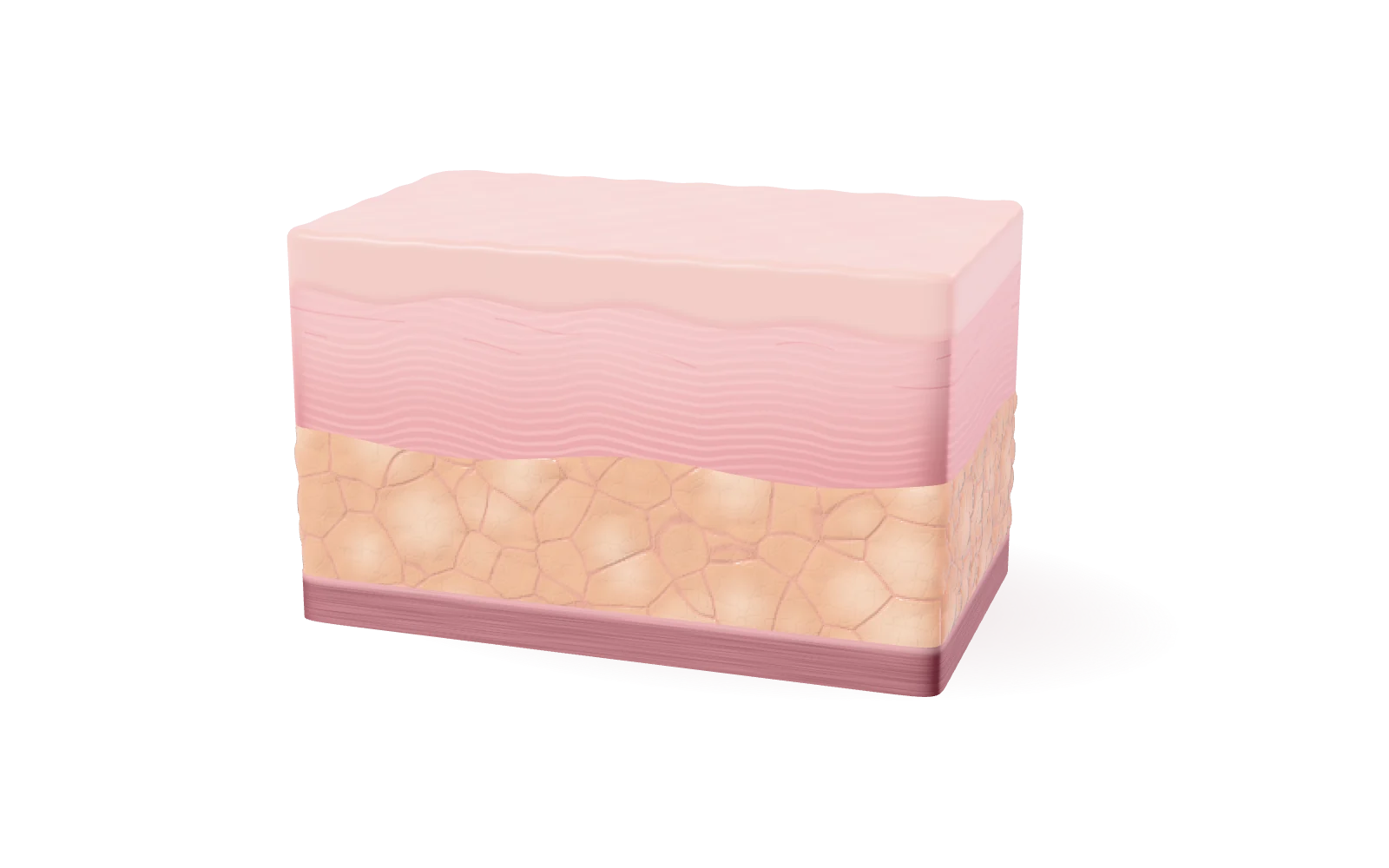
Depth: epidermis to dermis This is a model, so layer thickness is not to scale.
How it works
Examination firstA mole that is changing in size, shape, or color is examined before removal. If needed, we start with a biopsy, which is covered by National Health Insurance (NHI).
01What it uses
A laser or an electrical instrument
Heat from a laser that water absorbs, or from a small electrical instrument, removes the growth little by little.
02Which layer
Epidermis to dermis
Age spots and skin tags sit mostly in the epidermis, while a mole can reach into the dermis. We watch the depth and remove only as much as needed.
03How it works
New skin where tissue was removed
A scab forms, and new skin grows in beneath it. The deeper the removal, the greater the chance of a scar or a small dent.
Concerns and how it works
If this sounds like you
- A mole on my face bothers me
- I have more age spots around my eyes and temples
- Small skin tags have appeared on my neck
A mole is a cluster of pigment cells, an age spot (seborrheic keratosis) is a thickened patch of epidermis, and a skin tag is a small, soft flap of skin. People often group them together, but they differ in depth and shape, so each is removed in a different way. If a skin cancer is mistaken for a mole and lasered off, its diagnosis can be delayed.
Treatment details
Sessions, downtime, and side effects
- Usual sessions
- Usually 1 session
- Interval
- Again after 4 weeks, if needed
- Treatment time
- 10–30 min, depending on how many
- Numbing
- Numbing cream or local anesthetic
- Downtime
- Scabs for 5–10 days on the face, longer on the body
What it is for
Moles, age spots (seborrheic keratosis), and skin tags. How much your skin changes, and how quickly, varies from person to person.
Side effects
A small dent, scarring, and darker or lighter skin can occur, and the spot can come back. For a mole with an unusual shape, we advise a biopsy first.
Is it right for you
When it suits you,and when it may not
- Good for: You have a small mole that has looked the same for years
- Good for: You have several age spots or skin tags
- Good for: After an examination, you have decided to remove it for cosmetic reasons
- Good for: You have no big events during the 5–10 days a scab stays on your face
- May not suit: A mole that has recently grown or changed in shape or color (we examine it first and do a biopsy if needed)
- May not suit: A tendency to form keloids (raised, overgrown scars), or an area where scars stand out easily, such as the chest or shoulders (we decide after talking it through)
- May not suit: Inflammation or a wound in the treatment area
Before and after
From before your visit back to daily life
- BeforeExamination, plan, and price
- Day of treatment10–30 min, depending on how many · numbing cream or local anesthetic
- After 7 daysOK again: makeup
- Around 10 daysUsually healed by now (varies by person)
- After 14 daysOK again: saunas and hot baths
Before treatment
- Tell us how long it has been there and whether its size or color has changed.
- Let us know if you take blood thinners. Please do not stop a prescribed medicine on your own.
- If you scar easily, please let us know in advance.
- On the face, scabs last 5–10 days, so we choose a date that works around important events.
After treatment
- Keep healing tape on for 1–2 weeks, and replace it if it comes off.
- Wait 1 week before wearing makeup on the treated spot.
- Avoid saunas and hot baths for 1–2 weeks, and do not pick off the scab.
- New skin darkens easily in the sun, so wear sunscreen.
Price
The final price, VAT included
This is a self-pay fee. There are no discounts or promotional prices, and we go over each item and its price again before treatment.
- One mole, up to 2 mm across₩11,000
- One mole, over 2 mm (varies by size)₩22,000–₩55,000
- One age spot (varies by size)₩22,000–₩88,000
Self-pay · final price, VAT included · as of Nov 2, 2026
SuppliesIncluded: healing tape
MedicationIncluded: numbing cream or local anesthetic
Removal for cosmetic reasons is self-pay (not covered by NHI). If the examination shows a biopsy is needed, it is covered by NHI.
Common questions
What people often ask about mole & age spot removal
How much pain should I expect?
We apply numbing cream or give a small local anesthetic injection first. The numbing may sting briefly, and what you feel after that differs from person to person.
How long will it take me to recover?
Scabs last 5–10 days on the face and longer on the body. After a scab falls off, the spot may look reddish or light brown for a while.
How many sessions will I need?
Usually one session. Part of a deep mole may remain or return, so if needed we check it again after 4 weeks.
Can I combine it with other treatments?
We can treat other areas on the same day. For laser treatment on the spot where a mole was removed, we wait until the scab has come off and the new skin has settled, and we set that timing at your examination.
Keep exploring
Other treatments in the same layer
Skin conditions in the same layer (covered by NHI): acne, atopic dermatitis, and eczema & hand eczema. Reaching the same layer does not make this a treatment for those conditions.