

Atopic dermatitis
Atopic dermatitis is a long-term condition in which a weak skin barrier lets itching and rashes return again and again. We see patients from young children to adults.
Where it often appears
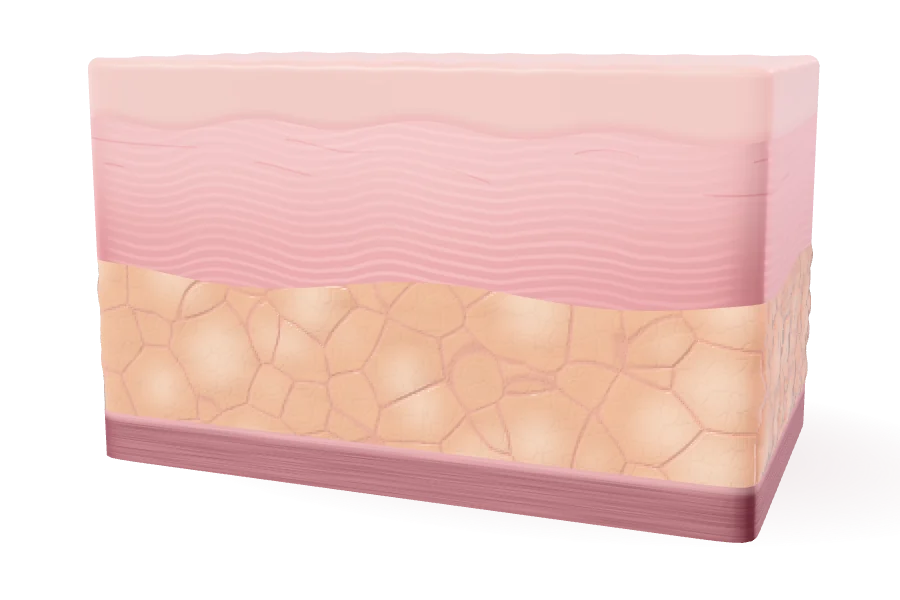
Cheeks (babies) · mainly epidermis to dermis
The barrier in the stratum corneum weakens, and inflammation develops mainly in the epidermis and upper dermis.
Skin model · not to scaleWhat brings people in
- I can’t sleep at night because I keep scratching
- The insides of my arms and the backs of my knees are rough and oozing
- My child scratches until it bleeds
- My skin gets better, then worse, over and over
Why it happens
- The barrier in the skin’s outermost layer is weak, so moisture escapes and irritants get in easily.
- Some people have an immune system that reacts strongly, and many have family members with allergic conditions.
- Dry weather, sweat, rough fabrics, stress, and skin infections make symptoms worse.
The barrier in the stratum corneum weakens, and inflammation develops mainly in the epidermis and upper dermis. Layer thicknesses in this model are adjusted for clarity. In real skin, the dermis is more than ten times thicker than the epidermis.
Examination and tests
- We diagnose it from how the skin looks and how it has changed over time.
- We may do an allergy blood test if needed, but we do not decide the cause or cut out foods based on the result alone.
- If there is oozing or yellow crusting, we check for a bacterial infection as well.
Treatment
InsuranceNHI covers examinations, topical and oral medication, and phototherapy.
Moisturizing
This is the foundation of treatment. Apply moisturizer at least twice a day, and after washing, before your skin dries.
Topical medication
When the skin is inflamed, we use a steroid or non-steroid ointment, and as it improves, we plan with you how to cut back gradually.
Oral medication
If itching keeps you from sleeping, we add oral medication to ease it.
Phototherapy and next steps
If topical medication does not keep it under control, we offer phototherapy (treatment with measured ultraviolet light, by appointment). For more severe cases, we consider oral medication or injection treatment and refer you to a larger hospital if needed.
Treatment is decided after the examination. How much it helps, and how quickly, varies from person to person.
What to do at home
Bathe briefly in lukewarm water, and apply moisturizer before your skin dries.
Keep nails short, and wear soft fabrics such as cotton.
Wash or wipe off sweat, and keep rooms from getting too hot or dry.
Squeeze ointment along one fingertip, from the tip to the first crease, and spread it over an area the size of two adult palms. Keep to the length of time and number of applications we set.
Come in soon if
- Oozing and yellow crusts spread quickly (this may be a bacterial infection)
- Clusters of small blisters spread and you have a fever (this may be a viral infection and needs prompt care)
- Itching has kept you awake for several nights
During clinic hours, simply come in; no appointment is needed. Questions: +82-2-0123-4567
Common questions
Will my child grow out of it?
Many children find it gets milder as they grow, but it varies, and for some it continues into adulthood. Keeping up with moisturizer even when the skin looks better helps reduce flare-ups.
Is it okay for me to use steroid ointment?
Using the prescribed strength, only on the areas and for the length of time we set, lowers the risk of the side effects people worry about. We choose a separate medicine for the face and the skin around the eyes. Stopping on your own often brings a flare, so we plan how to step down together.
Should I start with a food allergy test?
Even with a positive result, that food is often not the cause. We decide whether a child should avoid a food based on the examination and how the skin changes over time, never on a test result alone.