

Shingles & cold sores
Pain and a band of blisters on one side of the body are typical of shingles. Cold sores are small blisters that keep returning to the lips. Try to come in within 3 days of the blisters appearing.
Where it often appears
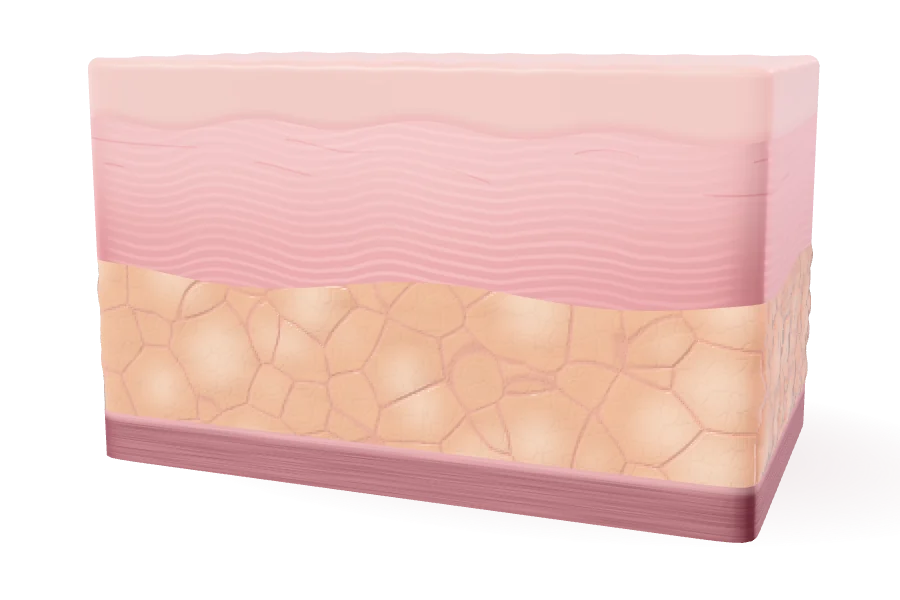
Face (one side) · mainly epidermis to dermis
A virus travels down a nerve and forms blisters in the epidermis. Pain can come before the blisters.
Skin model · not to scaleWhat brings people in
- One side of my body tingled and hurt, and then a line of blisters appeared
- It stings even when my clothes brush against it
- Small blisters keep appearing in the same spot on my lip

Why it happens
- Shingles comes from the chickenpox virus, which hides in the nerves after a childhood infection and becomes active again when immunity drops with age, fatigue, or illness.
- Cold sores come from the herpes simplex virus, which stays in the nerves and flares again with fatigue, colds, sunlight, or menstruation.
A virus travels down a nerve and forms blisters in the epidermis. Pain can come before the blisters. Layer thicknesses in this model are adjusted for clarity. In real skin, the dermis is more than ten times thicker than the epidermis.
Examination and tests
- In most cases, the shape and location of the blisters are enough to make the diagnosis.
- If it is hard to tell, we test for the virus.
Treatment
InsuranceBoth the examination and medication are covered by NHI.
Antiviral medication
Ideally, start taking it within 3 days of the blisters appearing. Pain can come first, so if one side hurts for no clear reason and blisters then appear, come in quickly.
Pain relief
Painkillers and nerve pain medicine ease the pain, and if it still hurts after the blisters heal, we continue treatment.
Wound care
We clean the blisters and scabs and apply ointment to keep them from getting infected.
Treatment is decided after the examination. How much it helps, and how quickly, varies from person to person.
What to do at home
Do not pop the blisters, and keep them clean and covered.
Until the blisters dry, stay away from children who have not had chickenpox, pregnant women, and people with weakened immunity.
Sleep well and rest. Take the medicine for the full number of days.
If you get cold sores often, tell us as soon as one starts to come up.
Come in soon if
- Shingles appears around the eye, on the forehead, or on the tip of the nose (you may also need an eye examination)
- Blisters form around the ear, and one side of the face droops or your hearing dulls
- Blisters spread across the body, or you take medicine that lowers immunity
- You have a fever and red swelling that spreads quickly
During clinic hours, simply come in; no appointment is needed. Questions: +82-2-0123-4567
Common questions
Can my shingles spread to other people?
Shingles itself does not pass from person to person, but the virus in the blisters can give chickenpox to someone who has never had it. Take care until the blisters have dried.
My blisters have healed, but it still hurts.
This is called postherpetic neuralgia, nerve pain that stays after shingles, and it is more common with age. We continue pain medicine, and if it lasts, we also point you to a pain clinic.
Is there a vaccine I can get?
Yes. The suggested age and number of doses differ by vaccine, so we talk it over at your visit, along with your overall health.