

Athlete’s foot & nail fungus
Fungal infections such as athlete’s foot and nail fungus take hold in the skin’s outermost layer and in the nails. We confirm the fungus under a microscope before treating it.
Where it often appears
Between the toes · mainly epidermis
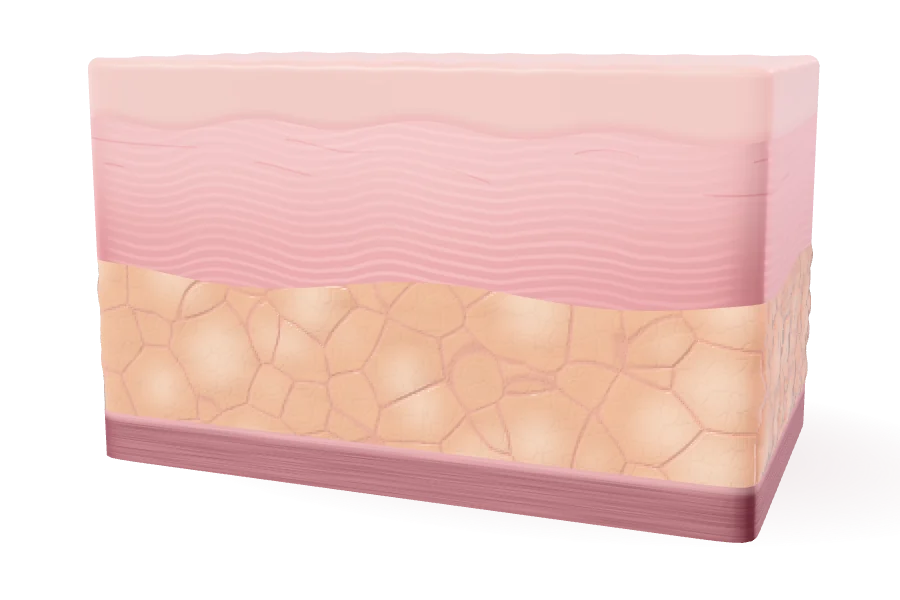
The fungus lives mainly in the stratum corneum and in the nails.
Skin model · not to scale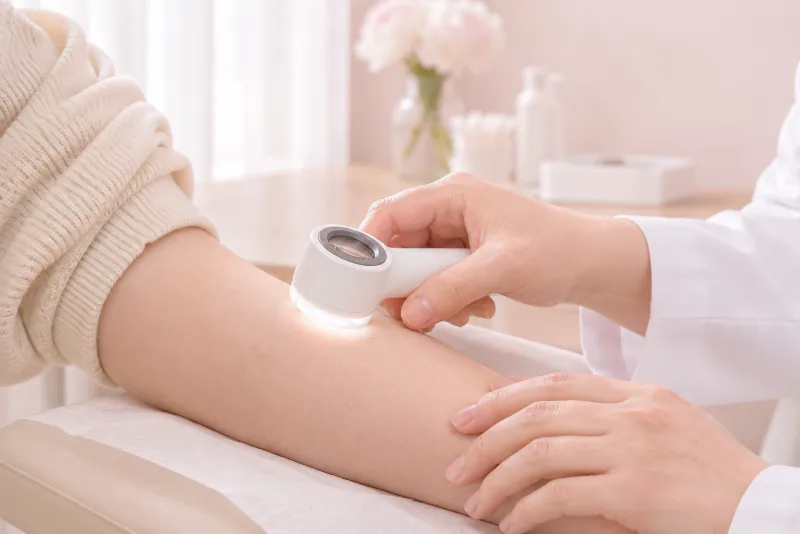
We start with a close look
Examination and tests
During your visit, we scrape off a little skin or nail and check it under the microscope for fungus.
If needed, we also do a culture test, which grows the fungus from a sample.
With some oral medications, we check your liver function with a blood test.
- MicroscopeWe scrape off a little skin and check it for fungus during your visit.
What brings people in
- The skin between my toes is white, soggy, and itchy
- The soles of my feet keep peeling
- My toenails have turned thick and yellow
- I have a red, itchy, ring-shaped rash in my groin
Why it happens
- A type of fungus called a dermatophyte lives by feeding on the skin’s dead outer layer.
- Sweat, moisture, and shoes worn for long hours give the fungus a place to thrive.
- It can spread through bare feet in shared spaces, or between family members through shared towels and bath mats.
The fungus lives mainly in the stratum corneum and in the nails. Layer thicknesses in this model are adjusted for clarity. In real skin, the dermis is more than ten times thicker than the epidermis.
Treatment
Fungus on the skin
Apply a topical antifungal medication, and keep using it for a set time after the symptoms settle.
Nail fungus
We use oral medication or a topical medication made for nails. Results can only be judged once a new nail has fully grown in, which takes months.
Nail laserSelf-pay
If oral medication is not an option for you, we can also discuss laser treatment for the nails.
InsuranceNHI covers the examination, the microscope test, and medication for fungal infections. Laser treatment for nail fungus is self-pay (not covered by NHI).
Treatment is decided after the examination. How much it helps, and how quickly, varies from person to person.
What to do at home
After washing your feet, dry them well, including between the toes.
Put on fresh cotton socks every day, and rotate your shoes so each pair can dry out.
Keep your own towel and bath mat, and have family members with symptoms treated at the same time.
Keep using the medicine for the full period, even after the itching stops.
Come in soon if
- You have diabetes and your foot becomes swollen, red, and painful (this may be a bacterial infection)
- There is oozing or pus, and you have a fever
During clinic hours, simply come in; no appointment is needed. Questions: +82-2-0123-4567
Common questions
Can I use an ointment from the pharmacy?
Putting antifungal medicine on eczema that is not fungal, or putting a medicine that contains steroids on a fungal infection, can make it spread instead. It is better to confirm with a microscope test first.
Will insurance pay for my nail laser treatment?
Laser treatment for nail fungus is self-pay (not covered by NHI). The examination, tests, and prescriptions for fungal infections are covered by NHI.
How long will my toenail fungus take to clear?
Even when the medicine is working, the nail only looks clear once the damaged part has been replaced by new nail, and a toenail can take more than a year to grow out fully. We check progress together every few months.