

Hair loss
We start by working out whether it is alopecia areata (patchy hair loss), male- or female-pattern hair loss, or sudden heavy shedding. Alopecia areata is covered by National Health Insurance (NHI), while pattern hair loss is self-pay, including the examination.
Where it often appears
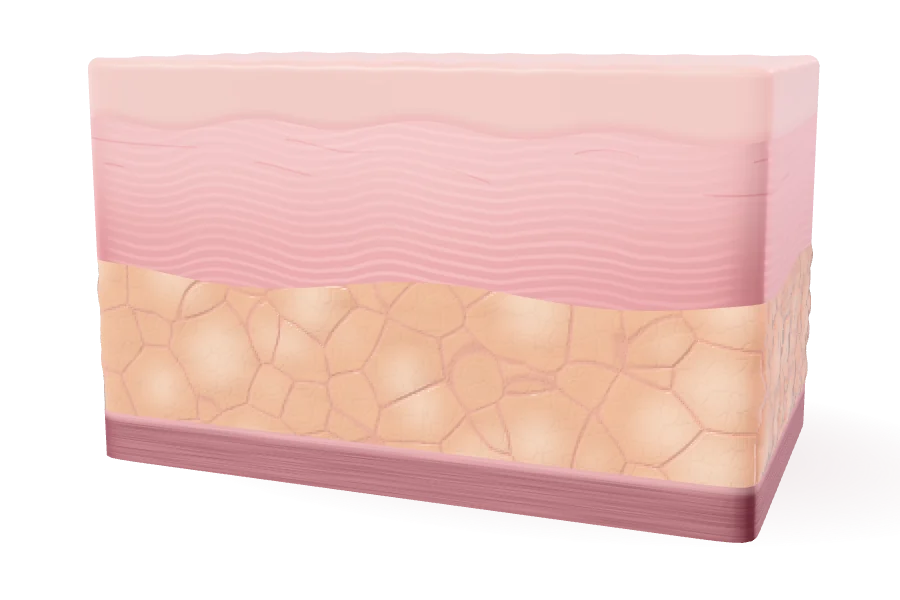
Crown · mainly dermis to subcutaneous fat
Hair roots (follicles) sit mainly in the lower dermis, at the border with the subcutaneous fat.
Skin model · not to scaleWhat brings people in
- Hair comes out in handfuls when I wash it
- A coin-sized bald patch suddenly appeared on my head
- My scalp shows through at the crown
- My hairline keeps creeping back
Why it happens
- In alopecia areata, the immune system attacks the hair roots.
- In male- and female-pattern hair loss, genes and hormones make hair grow gradually thinner.
- Heavy shedding across the whole scalp can start 2–3 months after childbirth, a serious illness, crash dieting, or major stress. Low iron or thyroid disease can also be the cause.
Hair roots (follicles) sit mainly in the lower dermis, at the border with the subcutaneous fat. Layer thicknesses in this model are adjusted for clarity. In real skin, the dermis is more than ten times thicker than the epidermis.
Examination and tests
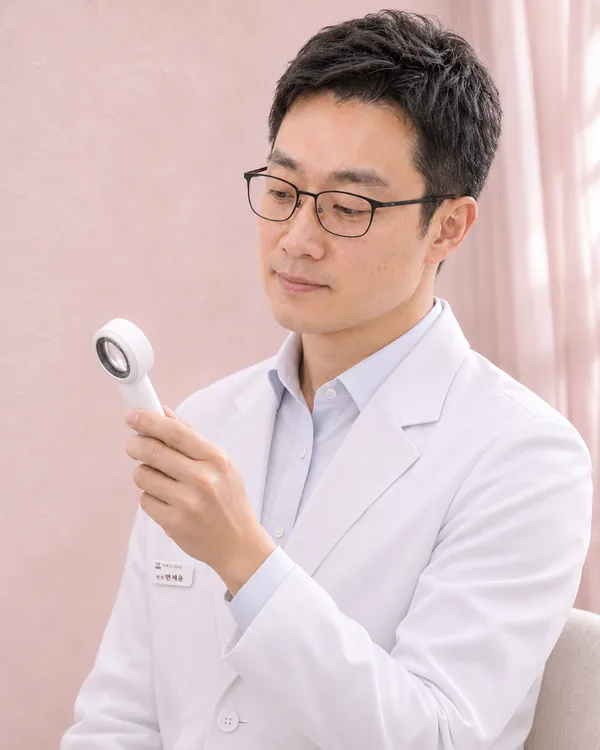
- We magnify the scalp and hair roots with a dermatoscope (a handheld lighted magnifier).
- We gently pull on a few hairs to see how many come out.
- If needed, we run blood tests (for anemia, iron, thyroid function, and more).
Treatment
InsuranceExaminations and treatment for alopecia areata are covered by NHI. Male- and female-pattern hair loss is self-pay (not covered by NHI), starting with the examination, and medication is paid for separately at the pharmacy.
Alopecia areata (NHI covered)
We treat it with topical medication and injections into the bald patches. If it is widespread or long-standing, we consider other treatments and refer you to a larger hospital when needed.
Male- and female-pattern hair lossSelf-pay
We prescribe oral and topical medications that slow its progress. Everything from the examination on is self-pay, and medication is paid for separately at the pharmacy.
Sudden heavy shedding
We look for the cause and correct it, then watch with you over several months to see whether the hair grows back.
Treatment is decided after the examination. How much it helps, and how quickly, varies from person to person.
What to do at home
Wash your scalp with a mild shampoo and dry it well.
Do not keep your hair in tight ponytails or other pulling styles for long periods.
Avoid crash diets and eat a balanced diet.
A photo taken once a month, in the same spot and the same light, makes changes easier to follow.
Come in soon if
- You lose a lot of hair across your whole scalp within a few weeks
- Patches of alopecia areata spread quickly to several places
- Your scalp turns red and painful with oozing or pus, or becomes smooth and shiny like a scar
During clinic hours, simply come in; no appointment is needed. Questions: +82-2-0123-4567
Common questions
Will my hair grow back after alopecia areata?
In many cases it grows back on its own, but treatment takes longer when patches are large or keep returning. How much grows back varies from person to person.
Why isn’t my male-pattern hair loss covered by insurance?
Under NHI rules, treatment for male- and female-pattern hair loss is a non-covered item, so the examination fee is self-pay as well. Hair loss that NHI treats as a disease, such as alopecia areata, is covered.
What happens if I stop the medicine?
With male- and female-pattern hair loss, stopping the medicine can let the hair loss progress again over several months. If you want to change or reduce your medicine, we decide together at your visit.