

Warts & corns
A virus causes warts, while corns form where pressure hardens the skin. Warts are treated by freezing (cryotherapy), usually over several visits.
Where it often appears
Face · mainly epidermis
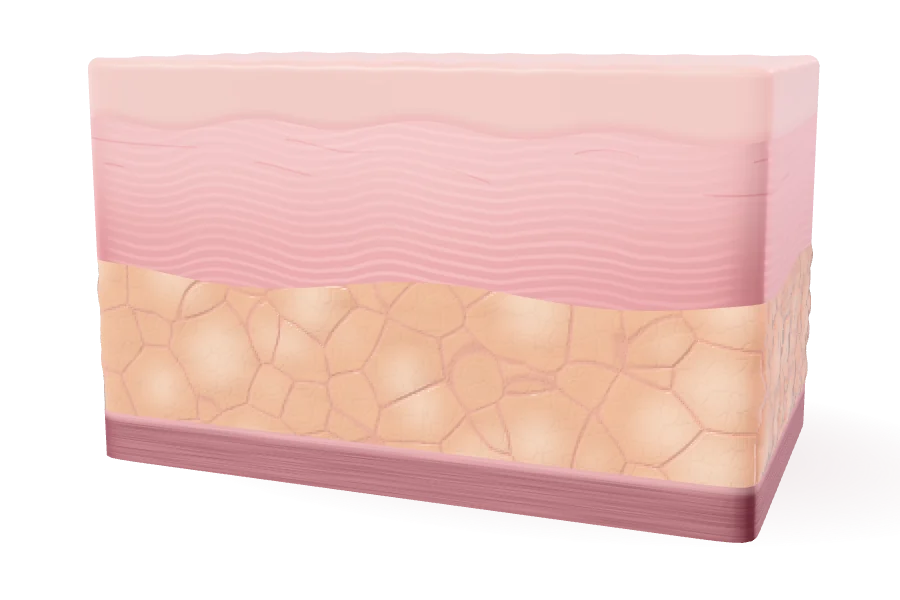
In warts, a virus enters cells of the epidermis and thickens it. In corns, the outer layer thickens where the skin is under pressure.
Skin model · not to scaleHow we approach treatment
InsuranceNHI covers wart examinations and cryotherapy.
Cryotherapy
We freeze the wart with liquid nitrogen, usually several times, 2–3 weeks apart.
Topical medication
We may add a medicine that softens and dissolves thickened skin.
Corns
We pare away the thick skin and look at your shoes and insoles with you to take pressure off the spot.
If it does not shrink
We decide on another approach after an examination, based on the size and location.
Treatment is decided after the examination. How much it helps, and how quickly, varies from person to person.
What brings people in
- There’s something like a callus on the sole of my foot, and it hurts when I walk
- Rough bumps on my fingers keep spreading
- I’m getting more small, flat bumps on my face
- My child has several small, shiny bumps on the body
Why it happens
- Warts form when human papillomavirus (HPV) enters through a tiny break in the skin and makes cells in the outer layer multiply. Touching or picking them spreads them to other spots.
- A corn is skin that has hardened into a cone after repeated pressure and rubbing in one spot. It has nothing to do with a virus.
- Shiny little bumps on a child’s body may be molluscum contagiosum, which is caused by a different virus.
In warts, a virus enters cells of the epidermis and thickens it. In corns, the outer layer thickens where the skin is under pressure. Layer thicknesses in this model are adjusted for clarity. In real skin, the dermis is more than ten times thicker than the epidermis.
Examination and tests
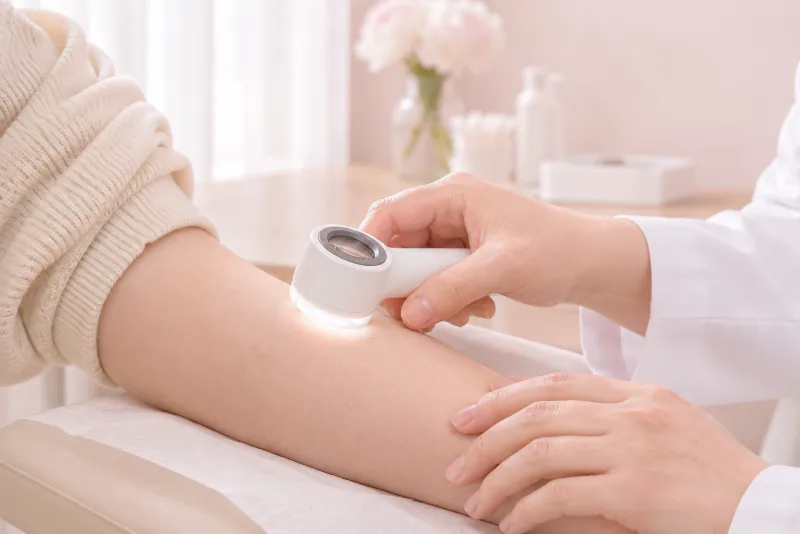
- A close look at the skin gives the diagnosis.
- Under magnification, warts show tiny dark red dots, while corns have a hard core in the center. That is how we tell them apart.
What to do at home
Do not pick at or shave warts. If you touch one, wash your hands.
Use your own towel and nail clippers.
Dry your feet well, and do not walk barefoot in shared locker rooms or at pools.
For corns, wear shoes that fit and keep pressure off the same spot.
Come in soon if
- A growth suddenly gets bigger, bleeds, or changes color (it may not be a wart)
- You have diabetes and a corn or sore on your foot (do not trim it yourself; have it checked)
During clinic hours, simply come in; no appointment is needed. Questions: +82-2-0123-4567
Common questions
Does cryotherapy hurt? Can my child have it?
Freezing brings a cold, stinging pain, and the spot may throb for a day or two. Young children may find it painful, so we also discuss other options, such as topical medication.
How many sessions will I need?
Usually several sessions, 2–3 weeks apart. The number depends on the size, location, and count of warts, and they can come back.
Will my child’s molluscum get the same treatment?
Molluscum is caused by a different virus. It sometimes clears on its own, but scratching spreads it easily, so we choose a method after an examination, based on the number of bumps and the child’s age.