

Psoriasis & vitiligo
In psoriasis, thick, red, scaly patches build up on the skin. In vitiligo, white patches appear. We treat both with topical medication and phototherapy (light treatment).
Where it often appears
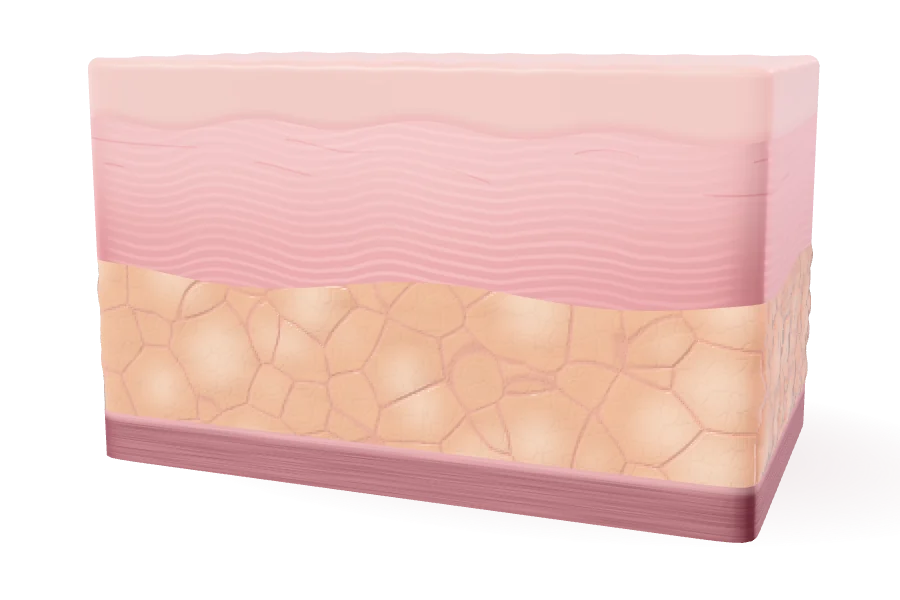
Scalp · mainly epidermis to dermis
In psoriasis, the epidermis thickens quickly, with inflammation in the upper dermis. In vitiligo, pigment cells in the epidermis decrease.
Skin model · not to scaleHow we approach treatment
InsuranceExaminations, medication, and phototherapy are covered by NHI.
Topical medication
We use medicines such as steroid ointments and vitamin D ointments, chosen to suit each area of skin.
Phototherapy
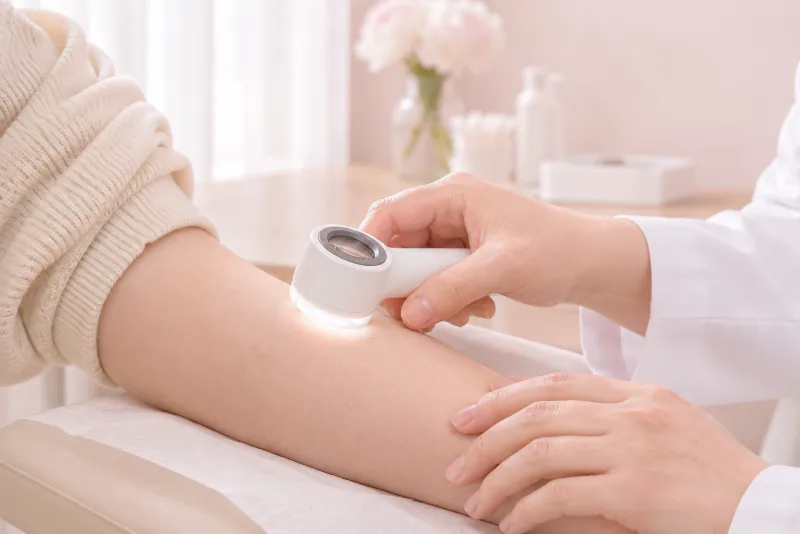
The skin is exposed to a set dose of ultraviolet light. You usually come two or three times a week on a steady schedule, and we book sessions after your first examination.
Next steps
If it is widespread or hard to control, we consider oral medication or injection treatment, with a referral to a larger hospital if needed.
Treatment is decided after the examination. How much it helps, and how quickly, varies from person to person.
What brings people in
- Thick, silvery scales build up on my elbows and knees
- The flakes on my scalp are thick and caked, with sharp edges
- My nails have small pits and are lifting
- White patches have appeared on my skin and keep spreading
Why it happens
- Psoriasis happens when the immune system misfires and cells in the outer layer of skin (the epidermis) are made too quickly.
- Vitiligo happens when the immune system attacks the pigment cells in the epidermis.
- Both tend to run in families, and stress, infection, or skin injury can set them off. Smoking and drinking can make psoriasis worse.
In psoriasis, the epidermis thickens quickly, with inflammation in the upper dermis. In vitiligo, pigment cells in the epidermis decrease. Layer thicknesses in this model are adjusted for clarity. In real skin, the dermis is more than ten times thicker than the epidermis.
Examination and tests
- Diagnosis is by examination, with a biopsy (a small skin sample) if it is hard to tell apart from other conditions.
- For vitiligo, we shine an ultraviolet lamp on the skin in a darkened room to see how far it extends. Thyroid disease can occur alongside it, so we may suggest a blood test.
- If psoriasis comes with swollen, painful joints, we check whether you also need care for your joints.
What to do at home
Moisturize often, and do not pick or scratch the scales (new patches tend to form where the skin is injured).
Quit smoking and cut back on alcohol.
Vitiligo patches burn easily in the sun, so apply sunscreen to them.
Keep to your phototherapy schedule, and do not sunbathe on treatment days.
Come in soon if
- Your whole body turns red and you have a fever or chills
- Pus-filled blisters suddenly appear over a wide area
- Your finger or knee joints become swollen and painful
During clinic hours, simply come in; no appointment is needed. Questions: +82-2-0123-4567
Common questions
Is my psoriasis contagious?
Psoriasis does not spread from person to person. Sharing a bath or towels is fine.
How often do I come in for phototherapy?
Usually two or three times a week, steadily over several months. We set the number of sessions and the length of treatment after the examination, based on how your skin responds. The first session is booked after your initial examination. If you are already coming in, call us or choose “Phototherapy” on the Book a visit page.
Will color return to my vitiligo patches?
How much color returns, and how long it takes, varies by area and from person to person. Once treatment starts, we review progress every few months.