

Hives (urticaria)
Hives rise as red, swollen welts that fade within a few hours, then often reappear somewhere else. We also treat chronic hives that last longer than 6 weeks.
Where it often appears
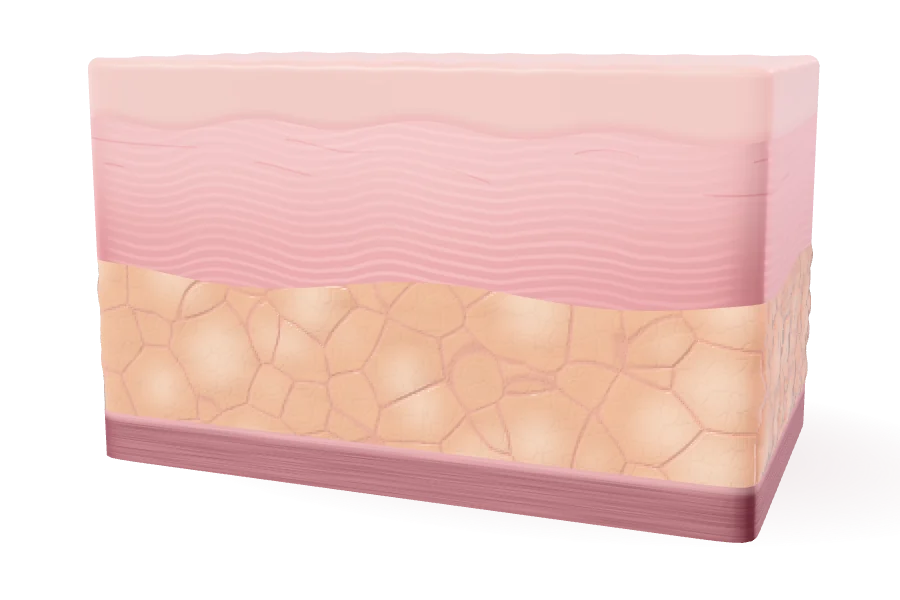
Lips · mainly dermis
Swelling occurs briefly, mainly in the dermis. Welts usually settle within a day, then rise again somewhere else.
Skin model · not to scaleWhat brings people in
- I get welts like mosquito bites that vanish a few hours later
- They break out all over my body every night
- Wherever I scratch, my skin swells up in lines
- I’ve had them for more than 6 weeks now

Why it happens
- Sudden hives can be set off by an infection such as a cold, by a food, or by a medicine (such as painkillers or antibiotics).
- With chronic hives lasting more than 6 weeks, the cause often cannot be found.
- Some hives come from physical triggers such as pressure, cold, heat, or exercise.
Swelling occurs briefly, mainly in the dermis. Welts usually settle within a day, then rise again somewhere else. Layer thicknesses in this model are adjusted for clarity. In real skin, the dermis is more than ten times thicker than the epidermis.
Examination and tests
- We ask when the hives appeared and what you ate or did beforehand, then examine you. Photos taken during a bad flare are helpful.
- For chronic hives, we run blood tests if needed.
Treatment
InsuranceNHI covers examinations, tests, and medication.
Medicine for itching
We start with an antihistamine that causes less drowsiness.
Adjusting the dose
For chronic hives, keep taking the medicine for the set period even on days without symptoms. If the hives do not settle, we adjust the dose.
Severe cases
For very severe hives, we may use a short course of steroids. If they stay hard to control over time, we consider injection treatment and, when needed, write a referral to a larger hospital.
Treatment is decided after the examination. How much it helps, and how quickly, varies from person to person.
What to do at home
Write down any foods or medicines you suspect and what you did that day.
Cool the itchy skin and try not to scratch.
Avoid hot baths, alcohol, and tight clothing, which can make symptoms worse.
Keep taking your prescribed medicine for the full period, even after the symptoms settle.
Come in soon if
- Right awayIf hives come with swelling of the lips, tongue, or throat, or with shortness of breath, do not wait. Call 119 (Korea’s emergency number) or go to the nearest emergency room.
- Right awayIf hives come with dizziness, stomach pain, or vomiting, go straight to an emergency room as well.
- A hive that stays in one spot for more than a day and turns bruise-like needs a prompt examination.
During clinic hours, simply come in; no appointment is needed. Questions: +82-2-0123-4567
Common questions
Is it something I ate?
Food can set off sudden hives, but it is rarely the cause of chronic hives that last more than 6 weeks. We look at your notes before deciding whether to cut out any food.
How long do I take the medicine?
For sudden hives, usually a few days to a few weeks. Chronic hives need a longer course, with the dose reduced step by step. We set the length at your visit.
Can I give hives to someone else?
Hives are not contagious.